Education · Health Sciences

Sevasadan Institute of Health Sciences

A pioneer in vocational training for paramedical courses, started in 2018 — 350 students graduated and working in hospitals across Sangli and the surrounding districts.

About the Institute

Skilled paramedics for a growing health sector

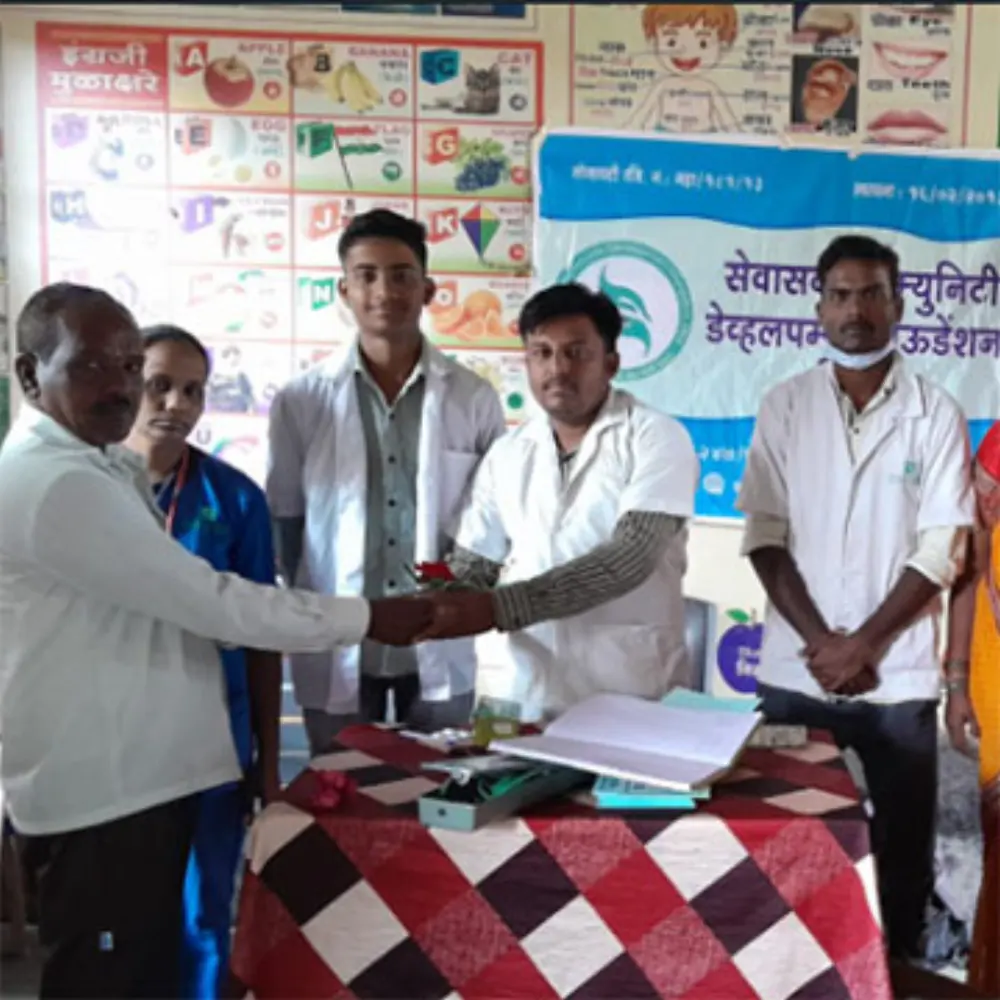
Sevasadan Institute of Health Sciences is a pioneer in vocational training for paramedical courses, started in the year 2018. With an ever-growing health sector, the requirement of skilled, technically sound paramedics increased fourfold over the last decade. This need generated the necessity for a training institute which will empower the youth with a government-approved skill set, a livelihood and, in turn, a better society.

So far, 350 students have graduated and completed their training at our institute. They have now joined and are working in various hospitals in Sangli and the surrounding districts. Additionally, three students have been awarded fellowships by MUHS Nashik.

Students are trained on highly sophisticated equipment and technology at certified hospitals. The doctors and technicians there take keen interest in training the students and grooming them to serve the healthcare industry with good knowledge and complete dedication. Ongoing guest lectures by practising doctors and continuous observership at hospitals and diagnostic centres give students an edge in the field.

350Students graduated
2018Year started
3MUHS fellowships
20Intake per course
Approved Deemed University

B.Voc Paramedical Degree & Diploma Courses

To provide affordable quality education while equipping students with knowledge and skills in their chosen paramedical course; to inculcate values, identify hidden talents, and shape students into future health care team members.

Duration: 06 Semesters Intake: 20 Students Eligibility: 10+2 (Any Stream) Minimum Marks: 45%

Medical Lab Technology (MLT)

A basic and important tool in the diagnosis and study of diseases for appropriate monitoring and treatment — Hematology, Microbiology, Biochemistry and General Pathology.

  • Medical laboratory equipment handling
  • Laboratory procedures (theory & applied learning)
  • Quality control in medical labs
  • Patient safety & emergency codes
  • Blood grouping and collection procedures
  • Medical law & ethics; advanced computer skills
  • Patient handling for pathological procedures
  • Medical records management
  • Clinical Biochemistry, Blood Bank and basic Hematology

Radiology & Medical Imaging Technology (RMIT)

Classroom and clinical experience with the latest technology, developing skilled radiographers for intervention procedures, CT scan, ultrasonography and MRI, using the principles of radiation protection.

  • Radiographic equipment operation — X-ray
  • Radiographic procedures (theory & applied learning)
  • Radiation exposure & quality control
  • Patient safety & emergency codes
  • Fluoroscopic procedures (theory & applied learning)
  • Medical law & ethics
  • Patient handling for radio-diagnostic procedures
  • Medical records management
  • Trained in X-rays, USG and CT scans

Dialysis Technology (DT)

Renal dialysis acts as an artificial kidney, removing waste and excess fluid from the blood when kidney failure or disease prevents the kidneys from doing so. Dialysis technicians operate these machines and monitor the patient during treatment — a field of growing scope as diabetes and its complications increase.

Optometry Technology (OPT)

Develops multipurpose ophthalmic manpower. Graduates can work in specialised eye hospitals and optical outlets, or practise independently and dispense glasses, contact lenses and low-vision aids.

Operation Theatre Technology (OTT)

Pre-, intra- and post-surgery duties within a hospital: transporting patients, preparing the operating room, and setting up and adjusting surgical equipment.

  • Prepare and maintain the operation theatre
  • Identify, move and maintain a sterile field
  • Follow infection control policies and procedures
  • Prepare patients for operative procedures
  • Intra-operative equipment and technical support

Cardiac Care Technology (CCT)

Cardiac care technicians measure how well a patient's heart is functioning, monitor heart rate, and administer the tests that help doctors in diagnosis.

Hospital Management (HM)

All activities related to the health service — for those interested in the administration, management and maintenance of an organisation, with job opportunities for hospital managers in India and abroad.

Diplomas & Fellowships

More ways to build a healthcare career

Diploma in Medical Record Science (MRD)

Managing the entire patient's information — collecting, filing and storing important data about the operations of a healthcare facility.

Diploma in Emergency Medical Services (EMS)

Timely care to victims of sudden and life-threatening illness or injury: accessing emergency care, care in the community, care en route, and care on arrival at the healthcare facility.

Fellowship / Certificate Courses

Full-time skill-enhancement courses of at least 12 months, as notified by the Maharashtra University of Health Sciences. Fellowships in Invasive Cardiology and Critical Care Medicine have been conducted at our training centre since 2019–20.

Admissions & enquiries

Talk to the academic office

Suresh Patil — 93094 12926, 99700 69796
academics.sevasadan@gmail.com · www.sevasadanlifeline.com